
Choosing Leader Diameter: Matching Braid + Leader for Strength and Castability

Choosing the right leader diameter is one of the most important parts of building a good braid-to-leader setup. The leader you choose affects more than just strength. It can change how cleanly your knot passes through the guides, how naturally your bait moves, and how much abrasion resistance you have around cover.
The key is balance.
A heavier leader can add strength and durability, but it can also create a larger connection knot and reduce bait action. A lighter leader can improve knot size and presentation, but it may not hold up as well around rock, wood, docks, grass, or bigger fish.
The recommendations below are meant to be used as a general starting point. They are not hard rules. The right braid and leader combination can change based on water clarity, cover, fish size, technique, knot choice, rod action, and personal preference. Use this guide as a reference, then adjust it based on what you see on the water.
What Is Leader Diameter?
Leader diameter is the actual thickness of your leader material. While most anglers shop by pound test, the line's diameter plays a major role in how your setup performs.
A thinner leader usually creates a smaller knot, casts better, and allows light baits to move more naturally. A thicker leader usually provides more abrasion resistance and more confidence around cover, but it can also make your braid-to-leader knot bulkier.
That is why two leaders with similar pound tests may not perform exactly the same. When matching braid and leader, it helps to think about both strength and diameter.
For many bass fishing applications, a fluorocarbon leader like Sunline FC Leader is a strong all-around choice, as it is built specifically for leader use. For clear water or pressured fish, Maboroshi FC Leader can be a good option when anglers want a lower-visibility leader presentation.

Why Braid-to-Leader Matching Matters
Braided line and a fluorocarbon leader each bring something different to the setup.
Braid is thin, strong, sensitive, and casts well. Fluorocarbon leader adds abrasion resistance, lower visibility, and a more natural connection to many baits. That is why braid-to-leader systems are so popular for finesse fishing, spinning rods, forward-facing sonar presentations, and many casting applications.
Sunline offers many braid options in its PE/Braided Fishing Line collection, including choices for finesse, all-purpose fishing, and heavy-cover techniques. Pairing the right braid with the right leader diameter can help you get the most out of the setup.
The goal is not always to use the heaviest leader you can get away with. In many situations, the best choice is the smallest leader diameter that still provides enough strength and abrasion resistance for the technique.
General Rule for Choosing Leader Diameter
A good way to choose leader diameter is to start with the technique, then adjust for the conditions.
For light finesse techniques, smaller leaders usually help with castability, bait action, and a more natural presentation. For heavier bottom-contact techniques or fishing around cover, upsizing the leader can help protect against abrasion and hard hooksets.
Here is a simple way to think about it:
-
Use a lighter leader when fishing clear water, small baits, spinning gear, or long-cast situations.
-
Use a heavier leader when fishing around rock, wood, docks, grass, zebra mussels, or bigger fish.
Shorten the leader or choose a smaller knot when using heavier leader material that needs to pass through the guides.
Again, these are starting points. Anglers may need to go lighter or heavier depending on their exact setup and conditions.
Braid-to-Leader Diameter Table by Technique
|
Technique |
Main Braid Range |
Leader Range |
Good Sunline Leader Option |
Why It Works |
|
Drop Shot |
8-10 lb braid |
5-8 lb fluorocarbon |
Small leader diameter helps with light baits, clear water, and natural presentation. |
|
|
Ned Rig |
8-10 lb braid |
6-10 lb fluorocarbon |
A good balance of castability, sensitivity, and bottom contact. |
|
|
Wacky Rig / Neko Rig |
10-12 lb braid |
7-10 lb fluorocarbon |
Keeps the presentation subtle while adding abrasion resistance. |
|
|
Shaky Head |
10-15 lb braid |
8-12 lb fluorocarbon |
Enough strength for bottom contact without hurting castability. |
|
|
Small Swimbaits |
10-15 lb braid |
8-12 lb fluorocarbon |
Helps with long casts while keeping bait action natural. |
|
|
Jerkbaits |
10-15 lb braid |
8-12 lb fluorocarbon |
Smaller leaders can help with casting distance and lure movement. |
|
|
Finesse Swim Jigs |
15-30 lb braid |
10-14 lb fluorocarbon |
Adds strength around sparse grass or light cover. |
|
|
Texas Rigs |
30-40 lb braid |
12-16 lb fluorocarbon |
Good power without creating an oversized connection knot. |
|
|
Jigs Around Cover |
40-50 lb braid |
16-20 lb fluorocarbon |
More abrasion resistance for wood, rock, grass, and docks. |
|
|
Heavy Cover / Flipping |
50-60 lb braid |
20 lb+ or straight braid |
FC Leader or straight braid |
Strength and abrasion resistance usually matter more than subtle presentation. |
|
Big Baits |
50-60 lb braid |
20-30 lb+ fluorocarbon |
Tepa Tapered FC Leader or heavier fluorocarbon |
Heavier leader can add shock strength and abrasion resistance. |
|
Forward-Facing Sonar Finesse |
8-12 lb braid |
5-10 lb fluorocarbon |
Long casts, small knots, and low visibility are often important. |
How Leader Diameter Affects Castability
Castability is one of the biggest reasons to pay attention to leader diameter.
When you tie braid directly to fluorocarbon, the connection knot has to move through the guides if you use a longer leader. The thicker the leader, the larger that knot usually becomes. A larger knot can tick the guides, reduce casting distance, or create more wear over time.
This matters most with spinning rods, finesse techniques, and long-cast presentations. If you are throwing a drop shot, Ned rig, small swimbait, or forward-facing sonar bait, a lighter leader can make the whole setup feel smoother.
For these applications, pairing a finesse braid with a smaller fluorocarbon leader is often the best starting point. A braid like SX1 Braid or another option from Sunline’s PE/Braided Fishing Line collection can be paired with FC Leader or Maboroshi FC Leader depending on the situation.
How Leader Diameter Affects Strength
Leader strength is about more than pound test. It also depends on abrasion resistance, knot strength, cover, hook size, drag setting, and how hard the fish are pulling.
If you are fishing around clean bottom or open water, you may be able to use a lighter leader with no problem. If you are fishing around rock, brush, docks, grass, or mussels, a heavier leader may be the better choice.
The tradeoff is that heavier leaders are not always better. If the leader is too thick for the technique, it can reduce bait action or make casting less efficient. That is why it helps to start with a practical range and then adjust based on the results.
For example, if you are breaking off around cover, increase the leader size. If your bait is not moving naturally or your knot is catching in the guides, move down in leader size or shorten the leader.
For certain applications, Tepa Tapered FC Leader can also be an option because it gives anglers a tapered leader design that combines two pound tests into one leader. That can be helpful when you want a stronger end section without making the entire leader setup larger than necessary.
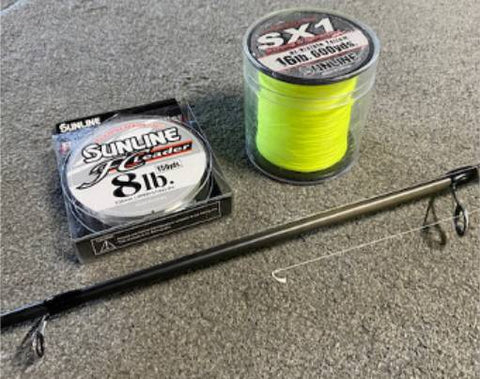
Choosing Leader Diameter is a Balance
Choosing the right leader diameter comes down to balancing strength, castability, abrasion resistance, and presentation. A lighter leader can help small baits move naturally and improve casting distance. A heavier leader can provide more confidence around cover and bigger fish.
The best approach is to start with a proven range for the technique, then adjust it based on the conditions you are fishing in. If you need more abrasion resistance, move up. If you need better casting or a more natural presentation, move down.
By pairing the right Sunline braid with the right fluorocarbon leader, anglers can build cleaner, stronger, better-casting setups for almost any technique.
Shop Sunline’s fluorocarbon leader options and braided fishing lines to find the right braid-to-leader combination for your next setup.